
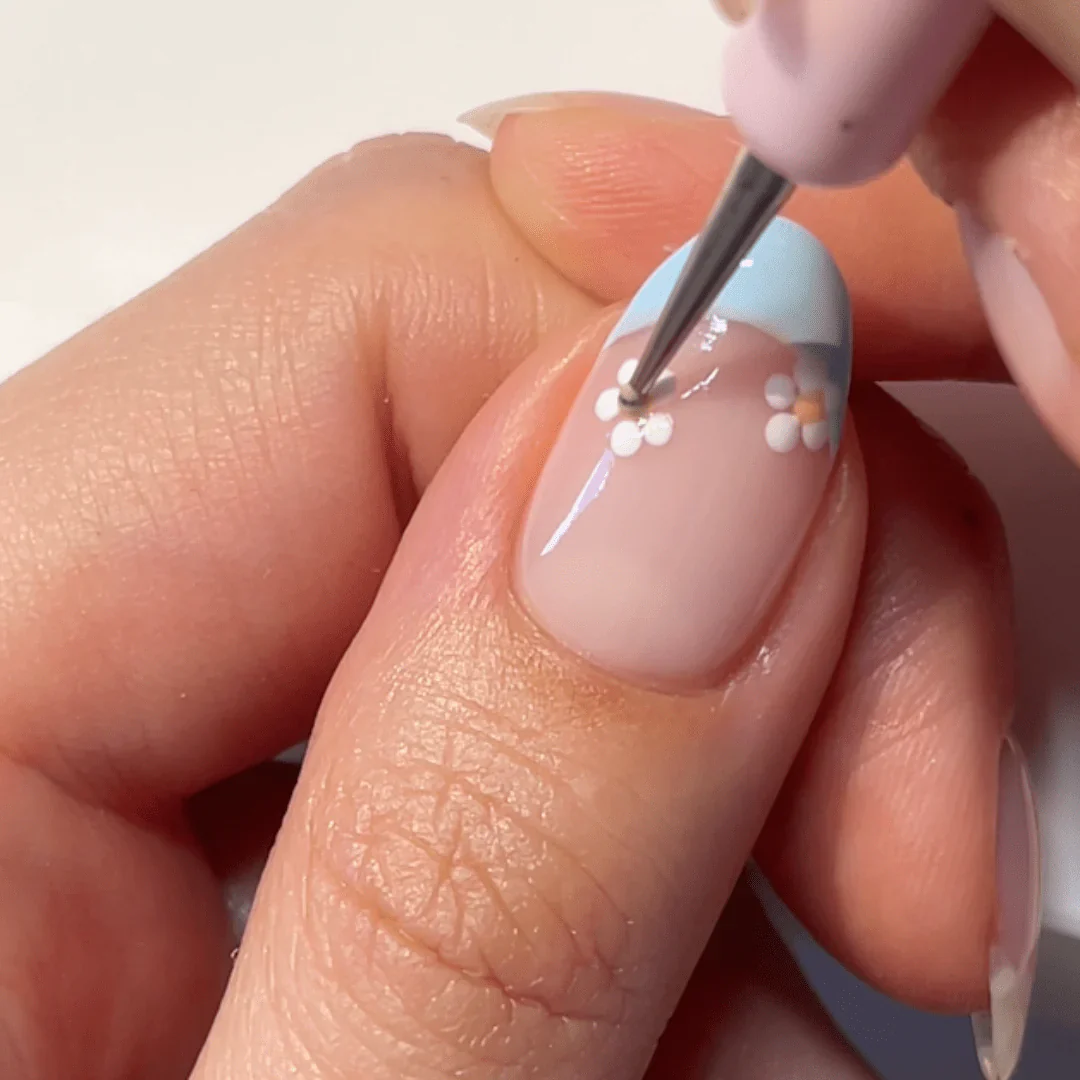
Nail art for beginners step by step begins with proper nail preparation to create a clean and smooth base. This includes cleaning the nails, shaping them neatly, and gently buffing the surface to ensure better polish adhesion. Applying a base coat is an essential step, as it protects the natural nails and helps the design last longer.
For beginners, it’s best to start by learning simple techniques such as creating dots with a dotting tool or a bobby pin, and making clean lines using striping tape. These easy methods help build confidence and control before moving on to more advanced styles like stamping or freehand designs. To complete the look, a top coat should always be applied to seal the artwork, add shine, and protect the design from chipping.
Things You Need Before Starting Nail Art
For nail art for beginners, having the right tools makes the process easier and helps achieve neat, long-lasting results. You don’t need professional salon equipment to begin—just a few basic essentials and a well-organized workspace.
Nail Prep & Care Essentials (Your Base)
- Nail Clippers and Files: Used to trim and shape nails into styles like square, oval, or almond.
- Cuticle Pusher or Wooden Stick: Helps gently push back cuticles for a cleaner nail surface.
- Cuticle Oil or Hand Lotion: Keeps cuticles soft and prevents dryness around the nails.
- Nail Buffer: Smooths the nail surface so polish applies evenly and lasts longer.
- Nail Polish Remover with Cotton Pads or Swabs: Useful for cleaning nails and correcting small mistakes.
Nail Art Application Tools
- Dotting Tool or Bobby Pin: Perfect for creating simple dots and patterns.
- Striping Brush or Thin Nail Art Brush: Helps draw straight lines and basic designs.
Nail Polishes & Finishing Products
- Nail Foundation Coat: Protects the natural nail and enhances polish durability.
- Colored Nail Polishes: Choose a few beginner-friendly shades to practice designs.
- Top Coat: Seals the design, adds shine, and improves durability.
Optional but Helpful Items
- UV or LED Lamp: Needed only if you plan to work with gel nail polish.
- Good Lighting and a Clean Workspace: Ensures better precision and a more professional finish.
How to Prepare Your Nails for Nail Art
Proper nail preparation is the foundation of nail art for beginners. Skipping this step can cause polish to chip quickly or designs to look uneven. A well-prepped nail surface helps your nail art last longer and appear more professional.
Step-by-Step Nail Preparation
1. Clean and Remove Old Polish
Start nail art for beginners by washing your hands thoroughly. Remove any old nail polish using a gentle nail polish remover to eliminate residue, oils, and dirt from the nail surface.
2. Trim and Shape Your Nails
Trim your nails to the desired length and file them carefully into your preferred shape, such as square, round, or almond. Always file in one direction to prevent nail splitting and breakage.
3. Care for Your Cuticles
Lightly push the cuticles back with a cuticle tool or wooden stick, taking care not to apply pressure. Only remove loose or dead skin if necessary, avoiding deep cutting to keep the nail bed healthy—an important habit in nail art for beginners.
4. Lightly Buff the Nail Surface
Use a fine-grit buffer to lightly smooth the nail surface and remove natural shine. This step helps polish adhere better, but over-buffing should be avoided, especially when learning nail art for beginners.
5. Remove Dust and Dehydrate Nails
Brush away any remaining dust, then wipe the nails with a lint-free pad dipped in alcohol or nail cleanser. This removes moisture and oils, ensuring better polish adhesion and longer-lasting nail art.
6. Apply Primer (Optional)
If you plan to work with gel polish or want extra durability, apply a nail primer. While optional, it can significantly improve adhesion for nail art for beginners practicing advanced techniques.
Easy Nail Art Techniques for Beginners
One of the best things about nail art for beginners is that you can create stylish and eye-catching designs using simple techniques and minimal tools. You don’t need advanced skills or professional training—just a few basics and some practice to achieve neat, salon-like results at home.
Essential Tools for Nail Art Beginners
Getting started with nail art for beginners doesn’t require a full professional kit. These basic tools are more than enough to practice and perfect simple designs:
- Nail File and Buffer: Helps maintain a smooth and even nail surface before applying designs.
- Base Coat and Top Coat: The base coat protects the nails, while the top coat seals the design and adds shine.
- Dotting Tool (or Bobby Pin/Toothpick): Ideal for creating dots, flowers, and simple patterns.
- Thin Detailing Brush: Useful for drawing straight lines and basic freehand designs.
- Cleanup Brush: An angled brush dipped in remover helps clean edges around the cuticles for a polished finish.
Common Nail Art Mistakes Beginners Should Avoid
- Skipping nail preparation: One of the biggest mistakes in nail art for beginners is starting without properly cleansing, lightly buffing, and removing surface oils, which leads to poor polish adhesion and early chipping.
- Ignoring cuticle care: Overgrown or uneven cuticles can make designs look messy. Beginners should gently push them back instead of cutting too deeply, which can damage the nail area.
- Filing nails incorrectly: Filing back and forth weakens nail edges and causes splitting. For nail art for beginners, filing in one direction with a fine-grit file helps maintain nail strength.
- Applying thick polish layers: Thick coats take longer to dry and are more likely to smudge. Thin, even layers give better control and a smoother finish.
- Overloading brushes or tools: Using too much polish on brushes or dotting tools can ruin patterns and cause flooding around the cuticles.
- Rushing drying time: Not allowing enough drying time between layers is a common issue in nail art for beginners and often results in smudged or dented designs.
- Skipping base or top coat: Leaving out these steps reduces durability. A base coat improves adhesion, while a top coat seals and protects the design.
- Using old or expired products: Thick, dried, or expired polishes don’t apply smoothly and can affect the overall quality of nail art.
Tips to Make Your Nail Art Last Longer
One of the biggest concerns in nail art for beginners is keeping designs fresh and chip-free for as long as possible. With the right application techniques and daily care habits, beginners can significantly extend the life of their nail art.
Application Tips for Longer-Lasting Nail Art
- Start with oil-free nails: Before beginning nail art for beginners, ensure nails are completely clean and dry so polish adheres properly.
- Use a quality base coat: A good base coat acts as a bonding layer and protects natural nails from staining.
- Apply thin, even layers: Thin coats dry faster and wear better than thick layers, reducing the risk of peeling.
- Seal the nail tips: Lightly swiping polish along the free edge helps prevent early chipping—an essential habit in nail art for beginners.
- Finish with a durable top coat: A strong top coat locks in the design and adds shine. Reapplying it every few days helps maintain protection.
Daily Care Tips to Maintain Nail Art
- Wear gloves for household tasks: Cleaning products and excess water can weaken polish, so protection is key.
- Keep nails and cuticles moisturized: Regular use of cuticle oil keeps nails flexible and reduces breakage.
- Handle nails gently: Avoid using nails as tools to open, scratch, or pry objects.
- Limit exposure to heat: Prolonged heat can soften polish and reduce wear time.
- Avoid picking or peeling polish: Removing polish this way damages the nail surface and shortens manicure life.
Nail Art Practice Tips for Beginners
Practicing regularly is the key to improving nail art for beginners. You don’t need to be perfect at the start—consistent practice, patience, and the right habits will help you gain confidence and control over time.
- Start with simple designs: Focus on easy patterns such as dots, stripes, and basic shapes before attempting detailed or complex nail art. This approach is ideal for nail art for beginners.
- Use proper practice surfaces: Practice on nail tips, swatch sticks, or even paper to get comfortable with tools and polish flow without pressure.
- Choose beginner-friendly tools: Dotting tools and liner brushes offer better precision and control. Clean tools immediately after use to maintain their shape and performance.
- Improve brush control: Hold brushes like a pencil and use light pressure for fine details. Pull the brush gently for smooth lines rather than dragging it back and forth.
- Keep your hand steady: Rest your working hand on a flat surface or against your other hand to minimize shaking while practicing nail art for beginners.
- Apply polish in thin layers: Thin coats are easier to manage, dry faster, and reduce smudging, making practice sessions more successful.
- Accept small imperfections: Mistakes are part of the learning process. Don’t aim for perfection—progress comes with practice and experimentation.
- Look for inspiration: Tutorials and social media content can spark ideas and help beginners understand new techniques visually.
- Maintain nail health: Keep nails and cuticles moisturized and avoid over-buffing to ensure a healthy base for continued practice.
Conclusion
Nail art doesn’t have to be complicated or intimidating. With the right mindset, a few basic tools, and consistent practice, nail art for beginners can be both enjoyable and rewarding. Each design you try—no matter how simple—helps build confidence and improve technique over time.
As you continue exploring nail art for beginners, remember that progress comes from patience and creativity rather than perfection. Simple designs often create the most elegant results, and experimenting at your own pace allows your personal style to develop naturally. Every attempt is a learning experience that brings you closer to mastering new patterns and techniques.
Most importantly, enjoy the process. Nail art for beginners is not just about the final look—it’s about self-expression, creativity, and having fun while learning something new. With dedication and curiosity, even beginners can create beautiful nail designs that feel uniquely their own.
1 thought on “Nail Art for Beginners Step-by-Step”